
Translator Pen for Students: Academic Reading and OCR-Based Study Support in Educational Environments
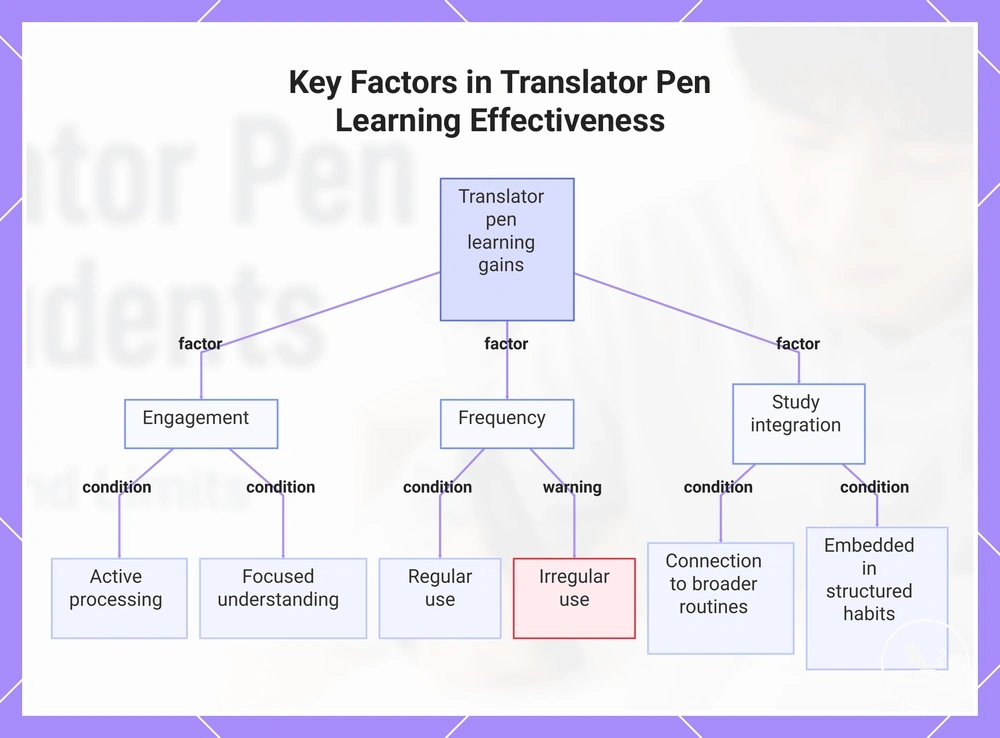
Translator pen is a reading tool for student learning that supports interaction with printed academic material through OCR scanning and translation functions, helping students engage with printed text in structured study contexts. It connects directly to academic material use cases where learners process printed text with guided comprehension support, as described in the translator pen guide within broader study environments.
OCR scanning in a translator pen supports student learning by converting printed text from textbooks and classroom materials into readable digital output that can be processed for meaning and interpretation. This process is used in contexts where comprehension support is needed while reading academic material, especially when students work through complex textbook reading tasks. The output may vary depending on print quality and language structure, so interpretation often depends on the conditions of the printed text. In classroom environments, this creates a bridge between physical pages and digital understanding during study workflows focused on comprehension.
A typical study workflow begins when students scan printed text using the translator pen, then observe the interpreted output to understand meaning at a segment level. The information is then integrated into notes or revision materials as part of structured academic material processing. This sequence supports reading continuity across textbooks and classroom resources while maintaining focus on comprehension support rather than isolated translation. Over time, this workflow helps organize how students interact with printed content during learning activities and prepares the transition into more detailed study methods in subsequent sections.
Scope of translator pen use in student learning environments, textbooks, and academic reading contexts
Scope of translator pen use in student learning environments, textbooks, and academic reading contexts refers to how a translator pen functions as a tool for converting printed academic text into readable or translatable output through OCR scanning within structured educational settings, as described in the translator pen guide. It defines the boundaries of where and how this reading tool is applied in student learning rather than how it operates in detail.
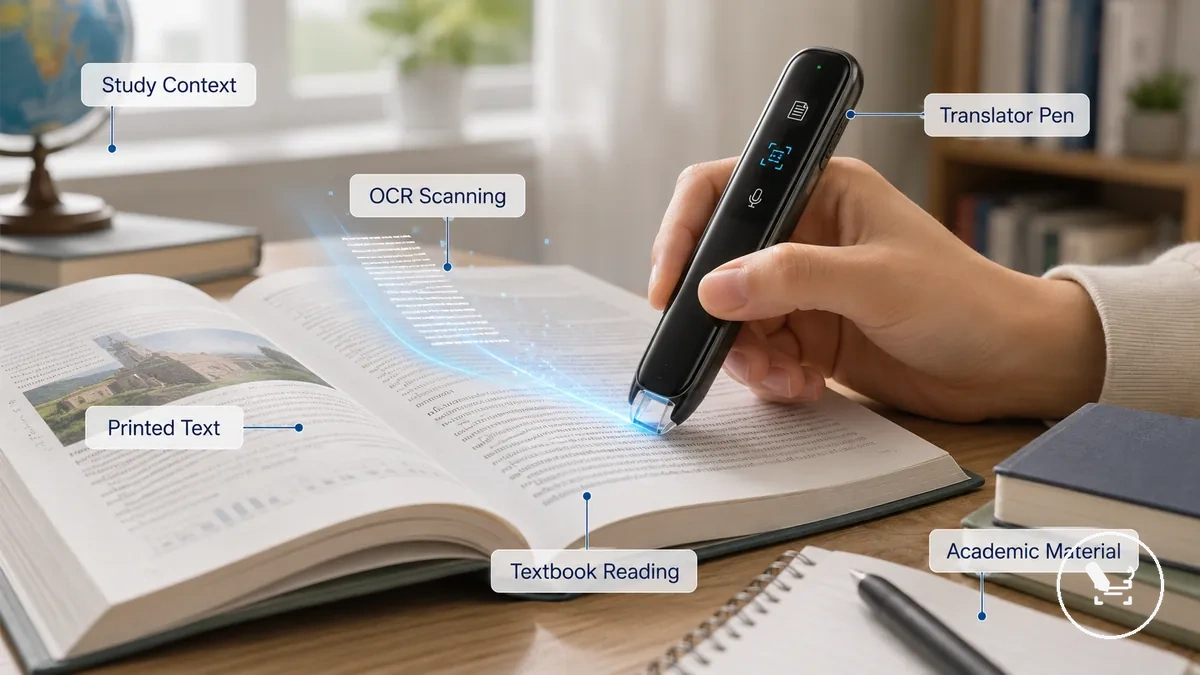
In student learning environments, the translator pen is typically used with printed text found in textbooks and classroom materials where OCR scanning helps convert written content into a form that supports comprehension. This includes situations where students engage with academic material during lessons or structured study sessions, especially when reading support is needed for unfamiliar language or complex phrasing. The scope remains tied to educational reading contexts rather than general or informal text usage.
The use of a translator pen in this scope is centered on study workflow activities involving textbook reading and homework-related academic tasks. It supports interaction with printed academic material in a way that aligns with structured learning objectives, while still depending on the quality and structure of the source text. This scope helps define the boundaries of student learning applications before moving into more detailed usage patterns in other sections.
Textbook reading and comprehension workflows using a translator pen for study tasks and note support
Textbook reading and comprehension workflows using a translator pen for study tasks and note support start with scanning printed text from academic material using a translator pen to capture OCR scanning output for interpretation during study workflow activities. The scanned printed text is converted into readable or translatable form, allowing student learning processes to stay connected with textbook reading and comprehension support without breaking focus from the academic material. This stage represents the initial interaction where printed text is processed and prepared for understanding in structured learning environments.
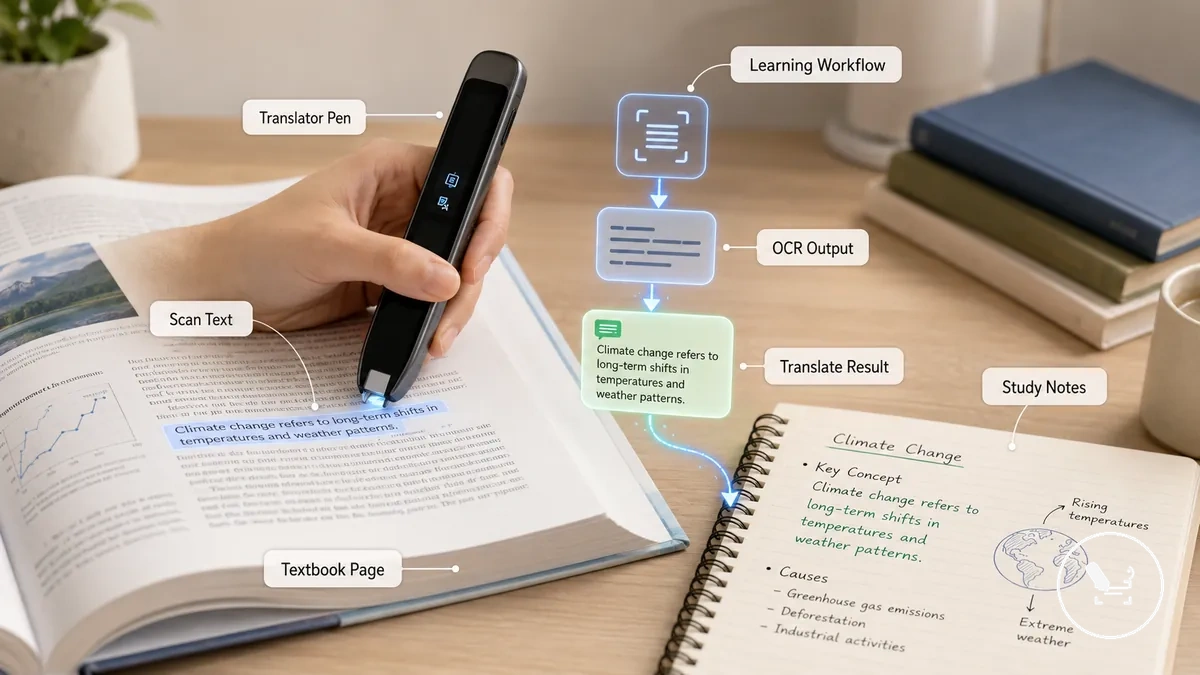
After scanning, students interpret the translated output to extract meaning aligned with their current academic task, especially during textbook reading sessions where comprehension support is required. The workflow then continues as learners connect this interpreted content to notes, summaries, or revision material as part of structured study workflow practice. This process supports consistent engagement with academic material and aligns with reading support with translator pens by linking scanning and interpretation to organized learning outcomes in student learning environments.
OCR scanning accuracy and text recognition performance in printed academic materials
OCR scanning accuracy and text recognition performance in printed academic materials depends on multiple conditions, including print quality, font type, layout density, and scanning stability, which together influence how consistently a translator pen can interpret written content in study environments. Performance is not fixed and may change depending on how clearly the printed text is structured and how steadily the scanning motion is applied during reading tasks.
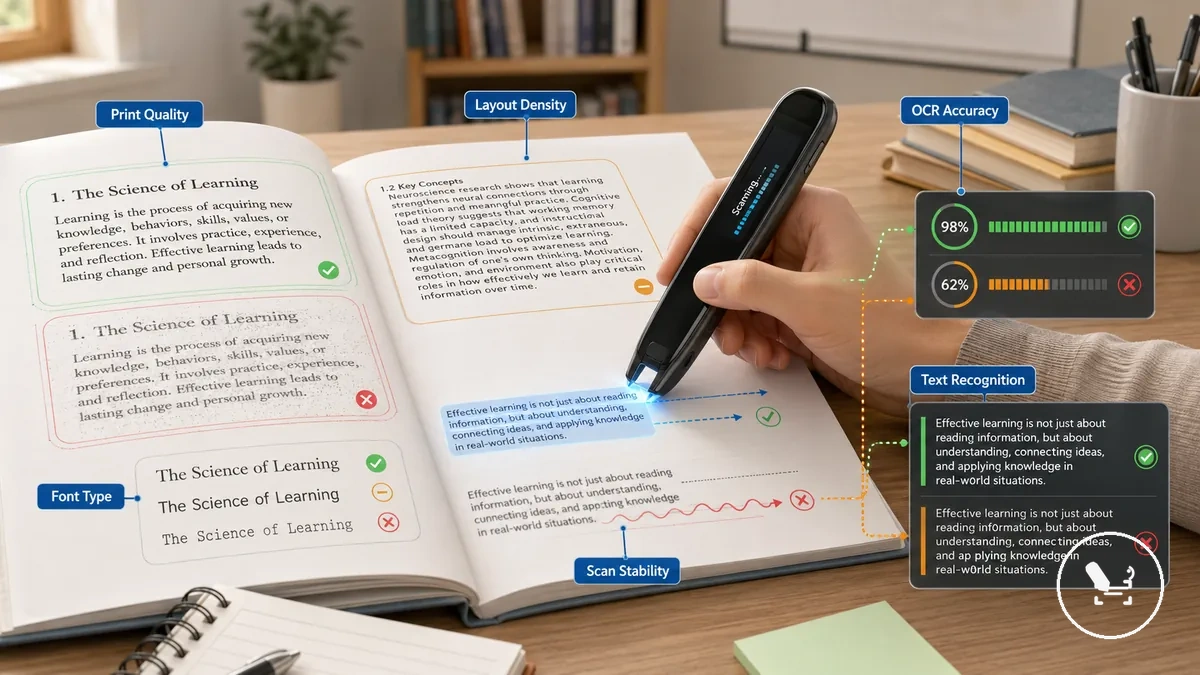
High-quality print with clear font shapes and balanced spacing typically supports more stable text recognition, while dense layouts or decorative fonts may reduce interpretation consistency. Variations in paper condition, ink clarity, and alignment can also influence how accurately characters are captured during scanning.
Scanning stability further affects recognition performance, as uneven movement or inconsistent contact with printed text can lead to partial or distorted output. In academic contexts, these factors combine to create variable OCR results that depend on both material structure and user handling conditions rather than a single fixed outcome. This aligns with translator pen accuracy boundary clarification.
Vocabulary acquisition and retention support in structured student study routines using translation pens
Vocabulary acquisition and retention support in structured student study routines using translation pens refers to the way immediate word translation and repeated exposure to translated meanings can assist vocabulary learning during regular study activities. The process works through direct interaction with unfamiliar words, where meaning is accessed quickly and then revisited across study sessions to reinforce familiarity over time.
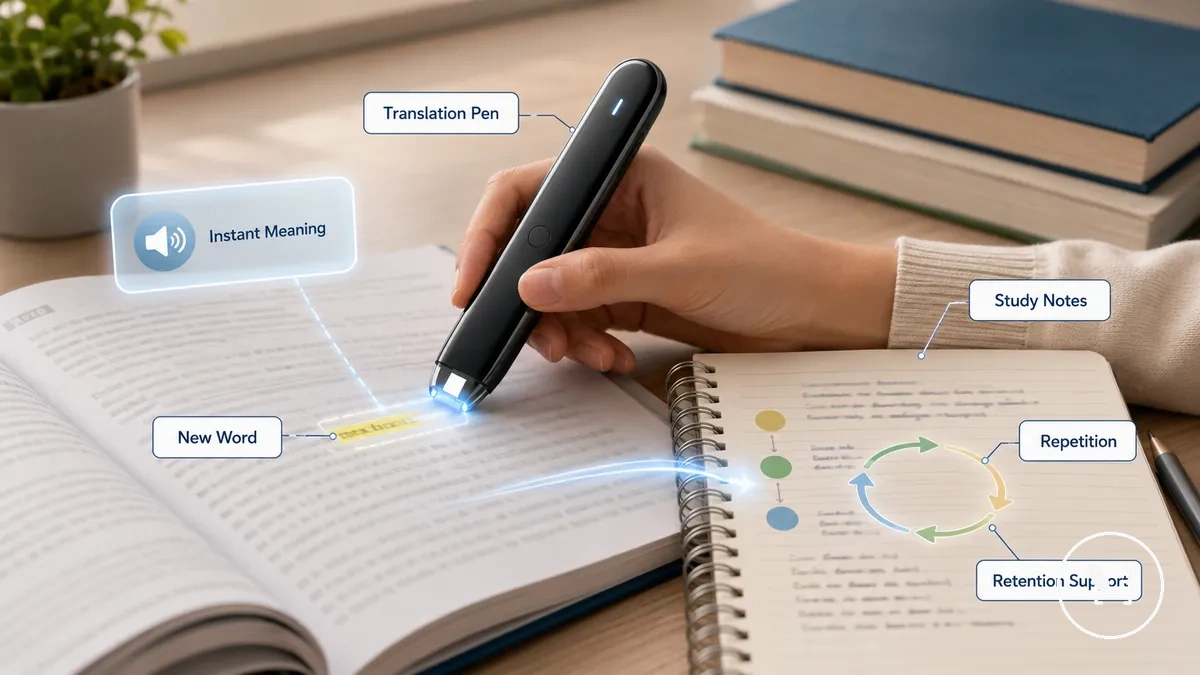
When a student encounters new vocabulary in printed academic material, the translation pen provides instant translation that helps reduce interruption while maintaining focus on context. This immediate access to meaning supports recognition of terms within real reading environments, which can help strengthen association between word form and usage when repeated across different materials.
Retention support is influenced by repetition-based reinforcement, where revisiting the same vocabulary through scanning and review activities can improve familiarity. Over time, structured exposure during study routines may support gradual retention, although outcomes depend on factors such as consistency of practice, text complexity, and learner engagement.
This type of vocabulary interaction also connects with broader learning approaches such as translator pen for language learning, where repeated exposure to translated terms supports incremental language development within structured study routines.
Limitations of translator pens in classrooms, exams, and academic integrity environments
Limitations of translator pens in classrooms, exams, and academic integrity environments refer to their restricted or conditional use in controlled educational settings where rules may limit external language assistance tools. These restrictions are typically defined by institutional or exam policies that prioritize independent student performance and fair assessment conditions.
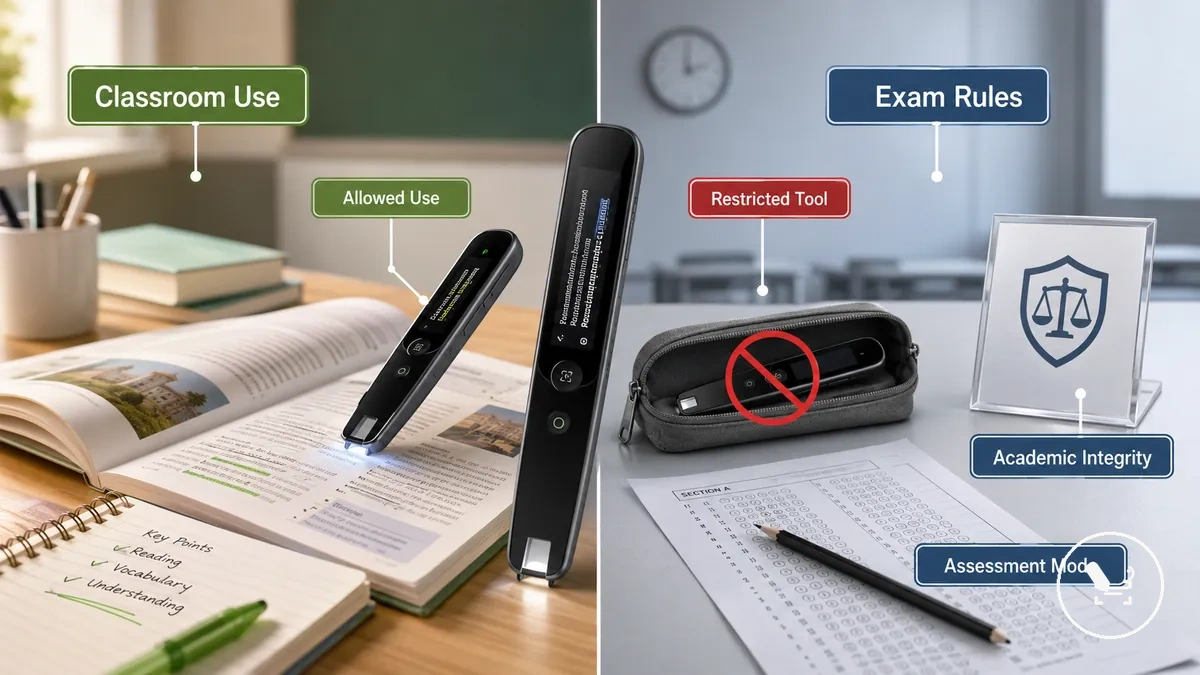
In many classroom situations, translator pens may be allowed during learning activities but restricted during quizzes, tests, or formal assessments. The decision often depends on the teaching context and whether the activity is focused on practice or evaluation of individual understanding.
In exam environments, usage is more commonly restricted because assessments are designed to measure unaided knowledge and comprehension. As a result, translator pens may not be permitted unless explicitly approved as an accessibility support under specific rules.
Academic integrity environments also influence these limitations, as institutions may define clear boundaries on external translation assistance tools to ensure fairness and consistency across students. The exact rules can vary by institution, exam board, or course requirements.
Selection criteria for students choosing a translator pen based on reading needs, portability, and study workload
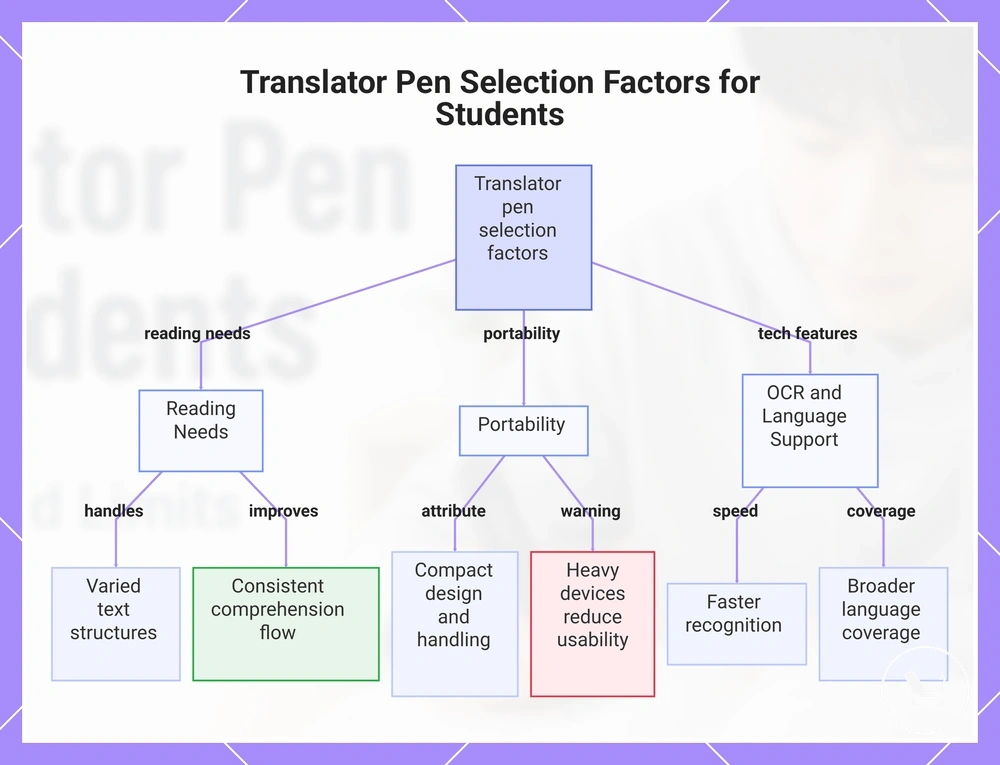
Selection criteria for students choosing a translator pen depends on reading needs, portability, OCR responsiveness, language support, and study workload demands across different learning contexts, especially when comparing options such as best translator pen for students based on how they fit specific study routines and usage intensity.
Reading needs influence how a translator pen performs in real study situations, particularly when students work with dense textbooks, short passages, or multilingual material. Devices that handle varied text structures more smoothly may support more consistent comprehension flow during study sessions.
Portability is another key factor, especially for students who move between classrooms, libraries, and home study environments. Compact designs and simple handling can support frequent use, while heavier or less convenient devices may reduce practical day-to-day usability.
OCR responsiveness and language support also affect selection decisions. Faster recognition can help maintain reading continuity, while broader language coverage may be important for students working across multiple subjects or foreign language materials with different complexity levels.
This chart outlines the key selection criteria for students choosing a translator pen, focusing on reading requirements, portability, and OCR and language support.
Factors influencing learning effectiveness and comprehension gains when using translator pens in study contexts
Learning effectiveness and comprehension gains when using translator pens depend on usage patterns such as engagement, frequency, and study integration in study contexts. These factors shape how consistently students interact with translated input and how well it is incorporated into ongoing learning activities.
Engagement level influences how actively students process translated results during reading. When interaction is intentional and focused on understanding rather than passive scanning, the translated output is more likely to support clearer comprehension of the surrounding academic material.
Frequency of use affects familiarity with both the device and the learning process. Regular use can support smoother reading transitions between original text and translated output, while irregular use may reduce continuity in comprehension development.
Study integration determines how well translator pen use is connected with broader learning routines such as note-taking, revision, and textbook reading. When translation activity is embedded into structured study habits, it can better support sustained understanding across sessions, depending on context and material complexity.
This chart shows the three main factors—engagement, frequency, and study integration—that influence learning effectiveness and comprehension gains when using translator pens in study contexts.