
Translator Pens for Language Learning: Benefits and Limitations in Study Contexts
Translator pen is a reading-support tool used in language learning that scans printed text and provides translated output to assist comprehension in study contexts. In language learning evaluation, the translator pen is not treated as a standalone learning system but as a support mechanism that interacts with vocabulary exposure, reading comprehension, and contextual interpretation of written materials. Its role is primarily to reduce immediate comprehension barriers while learners engage with authentic texts, allowing partial meaning access without replacing foundational learning processes. The effectiveness of a translator pen varies depending on study context, usage intensity, and learner proficiency level. This creates a framework where its impact must be assessed through both learning support and potential over-reliance risks. The evaluation lens therefore focuses on how the translator pen modifies reading behavior rather than assuming uniform learning outcomes.
Translator pen use in language learning can support vocabulary exposure and reading comprehension by making unfamiliar terms more accessible during reading tasks, while also providing pronunciation support through text-to-speech functions in some contexts. At the same time, its benefits are not isolated from limitations, since frequent reliance on scanning translation may reduce contextual inference effort and increase dependency risk in certain learners. The balance between improved comprehension flow and reduced recall effort depends on how often the translator pen is used and how deeply learners engage with the material beyond scanning. Vocabulary retention may improve through repeated exposure in some cases, while in others shallow processing may limit long-term retention and productive language ability. These dynamics are best understood as interconnected learning effects rather than fixed outcomes, especially when evaluating how reading habits adapt under tool-assisted conditions.
In a typical study context where a learner uses a translator pen while reading bilingual texts, comprehension may improve in the short term, but long-term learning outcomes depend on whether the learner also practices recall and independent interpretation. This scenario highlights how language learning outcomes are shaped by the interaction between tool-assisted reading and active cognitive engagement rather than scanning alone. The translator pen therefore sits between comprehension support and dependency risk depending on how it is integrated into study habits. To understand its functional role more clearly, it is necessary to examine its foundational mechanisms and reading-based learning implications in more detail within the translator pen guide. This leads into a deeper breakdown of how the device operates within structured reading and learning environments.
Role of Translator Pens in Language Acquisition and Reading-Based Learning Practice
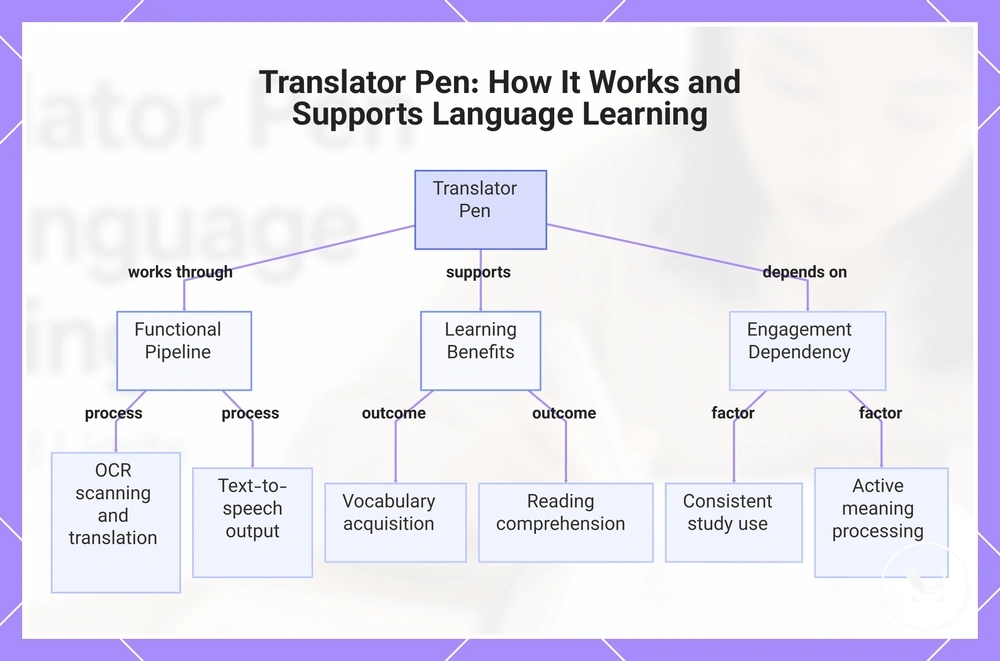
Translator pen is a handheld reading device that scans printed text and converts it into translated text and spoken audio output for use in language learning and reading-based study contexts. It functions through OCR scanning and text recognition that identifies printed characters, followed by translation output that converts recognized language into another form for immediate comprehension support. In many cases, text-to-speech is also included to provide audio reinforcement alongside visual translation, creating a combined printed-text-to-audio learning flow. This pipeline connects printed material with accessible language input during reading tasks. The translator pen therefore operates as a bridge between written language exposure and interpreted understanding rather than as a standalone learning system.
Translator pen use in language learning can support vocabulary acquisition and reading comprehension by making unfamiliar words more accessible during real reading-based study practice, especially when learners interact with continuous printed texts. This effect is typically shaped by how consistently OCR scanning and translation output are used within a study context, and how actively learners process meaning beyond surface recognition. In some cases, repeated exposure to translated input may contribute to vocabulary acquisition, while text-to-speech output can reinforce pronunciation support through auditory association with written forms. However, these outcomes remain dependent on learner engagement and do not occur in a uniform or automatic way across all study contexts. A more detailed breakdown of how these mechanisms influence reading-based learning can be found in the translator pen guide.
This chart shows how a translator pen functions as a reading device, its role in vocabulary acquisition and reading comprehension, and the dependency on learner engagement.
Vocabulary Learning Through Scan-and-Translate Exposure and Repetition Patterns
Vocabulary learning through scan-and-translate exposure works by increasing vocabulary exposure during contextual reading, where a translator pen supports repeated scan translation interactions that connect printed words with immediate meaning. This process operates through vocabulary exposure that occurs while learners continue reading without fully breaking comprehension flow. Repetition of scan translation events gradually increases familiarity with recurring terms across different reading contexts. Within this pattern, contextual reading becomes the environment where meaning is repeatedly reinforced through exposure rather than direct memorization. The overall mechanism is shaped by how frequently vocabulary exposure happens during reading activity.
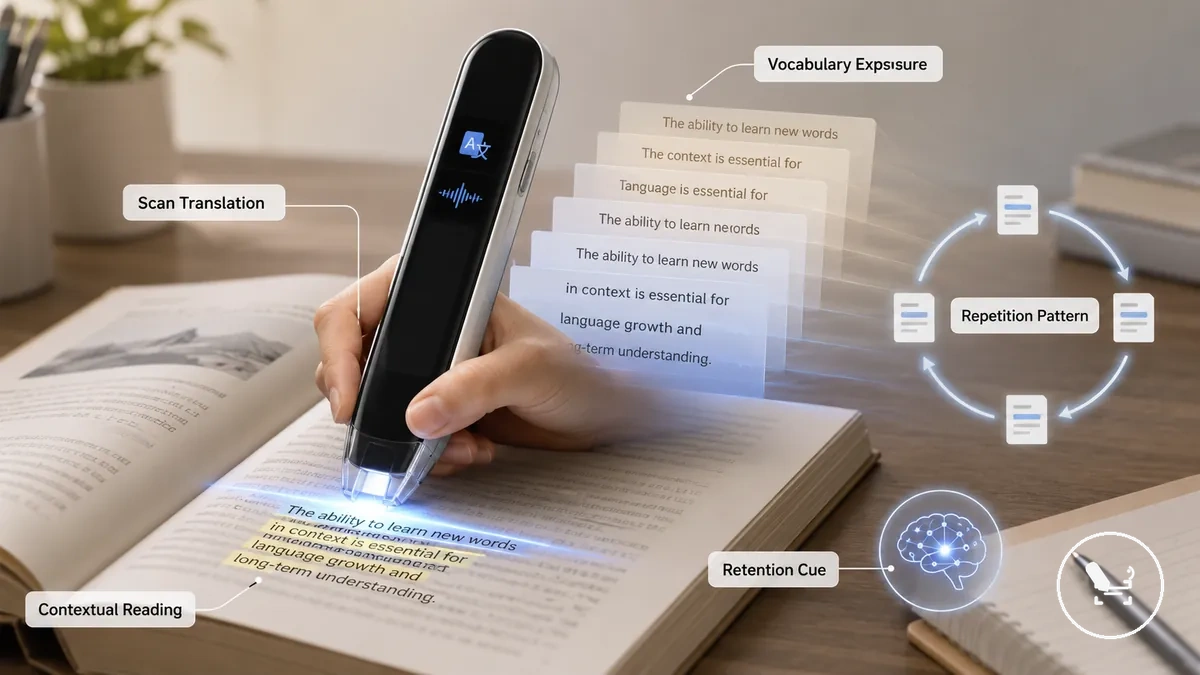
A learner reading a passage in a study context may repeatedly scan unfamiliar words with a translator pen, encountering the same terms across multiple pages or sessions. Each scan translation event adds another layer of vocabulary exposure, gradually strengthening recognition patterns linked to meaning. From an EAV perspective, exposure frequency acts as an attribute, repetition functions as a reinforcing variable, and retention develops as a probabilistic outcome influenced by contextual reading consistency. When repetition occurs across different contexts, the learner may experience improved retention, although this depends on engagement depth and reading continuity. In this structure, scan translation supports comprehension flow while also reinforcing vocabulary exposure through repeated interaction cycles, contributing to gradual retention cues rather than immediate memorization effects.
Vocabulary learning through scan translation does not automatically lead to memorization, since retention depends on repeated contextual encounters rather than single exposures. The translator pen supports repetition patterns, but the strength of vocabulary acquisition varies with reading consistency and learner engagement. Without continued contextual reading, vocabulary exposure may remain shallow and fade over time. This makes repetition a necessary but not sufficient condition for stable retention outcomes in language learning. The next aspect of reading-based development naturally extends toward pronunciation reinforcement through auditory exposure patterns.
Pronunciation and Text-to-Speech Support for Listening and Speaking Development
Text-to-speech support for listening and speaking development is a mechanism where spoken output is generated from written text to strengthen pronunciation clarity and listening comprehension in language learning. It connects visual vocabulary input with audible spoken output so learners can associate word forms with correct pronunciation patterns during reading-based study. This link between written language and audio feedback helps reduce uncertainty in early-stage language exposure by making spoken patterns immediately accessible. Text-to-speech therefore functions as a structured bridge between reading input and auditory learning reinforcement in a study context.
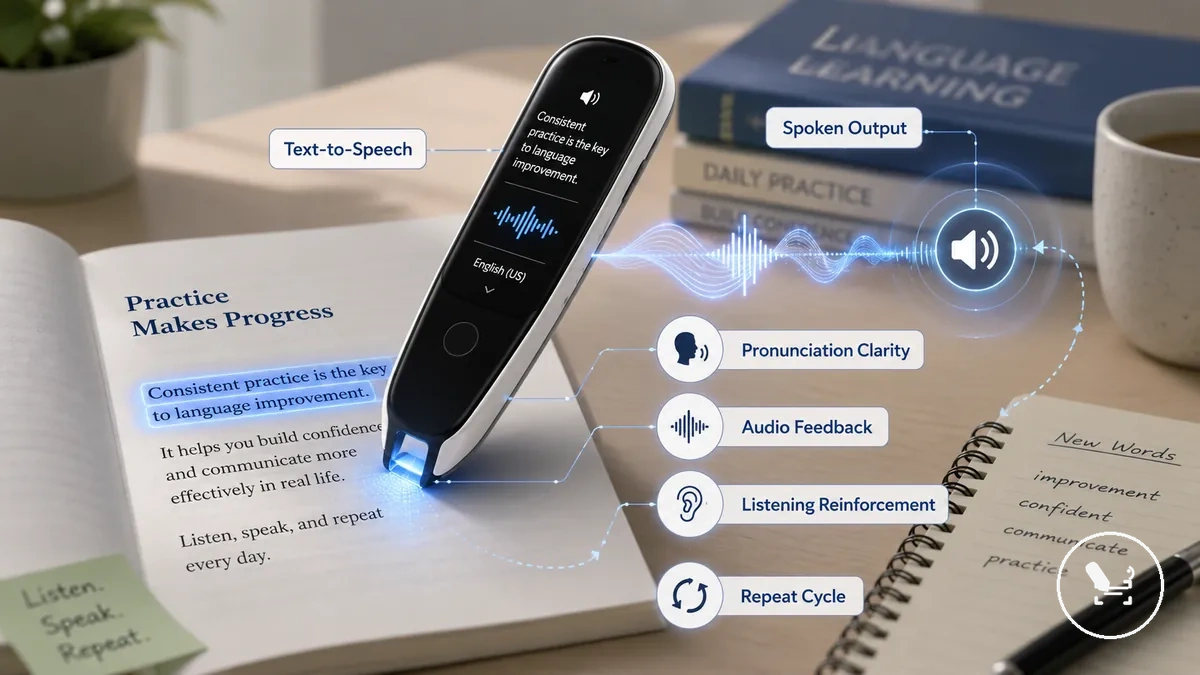
A learner may use text-to-speech repeatedly while encountering new vocabulary, creating a repeat-listen-recall cycle where spoken output is activated multiple times for the same word. This repetition supports listening reinforcement because pronunciation clarity is reinforced through repeated audio feedback during contextual reading. In beginner scenarios, this reduces hesitation by allowing immediate comparison between visual text and spoken output, especially when pronunciation is unfamiliar. Audio feedback helps stabilize listening patterns over time, but its effect depends on repetition frequency and consistent engagement with the material. When these cycles are maintained, spoken output becomes more recognizable, strengthening the connection between hearing and reading input.
Text-to-speech does not independently guarantee pronunciation mastery, as learning outcomes depend on active repetition and learner participation rather than passive listening alone. In some study contexts, learners may rely only on audio feedback without practicing recall, which can limit deeper pronunciation development. Listening reinforcement is therefore conditional on how often spoken output is revisited during contextual reading sessions. Without sustained engagement, improvements in pronunciation clarity may remain partial or inconsistent. This leads naturally to broader considerations of how spoken patterns integrate with overall language input processing.
Active vs Passive Learning Effects When Using Translator Pens in Study Environments
Active learning is defined as deliberate language use involving recall, production, and self-generated output, while passive learning refers to recognition-based understanding formed through scanning exposure and input-driven reading. In translator pen study environments, passive learning often occurs when learners scan text to access immediate meaning, supporting comprehension without requiring retrieval effort. Active learning, by contrast, requires learners to deliberately recall vocabulary, form sentences, or test understanding beyond recognition. The translator pen therefore operates primarily within passive learning conditions by enabling scanning-based exposure, while also creating opportunities for active learning when learners shift toward recall-based engagement. This creates a structured contrast between recognition and production processes.

Active learning typically produces higher retention depth because recall requires cognitive effort that strengthens memory encoding, while passive learning primarily supports comprehension through repeated scanning exposure and contextual reading. In scanning-only reading with a translator pen, learners may improve comprehension quickly but rely on recognition rather than retrieval, which can limit retention depth over time. In contrast, deliberate practice such as recall exercises or sentence formation engages active learning processes that reinforce retention depth through repeated output. However, passive learning remains valuable for building initial comprehension, especially when encountering unfamiliar vocabulary. The difference between the two modes is therefore reflected in how comprehension and retention depth develop under different engagement conditions.
A beginner may use a translator pen to scan unfamiliar text for immediate understanding, representing passive learning through recognition-based input, then later attempt recall by reconstructing sentences without scanning support. This combined approach creates a balance where passive learning supports comprehension while active learning strengthens retention depth through recall practice. In study environments, effectiveness depends on how learners integrate scanning exposure with deliberate recall tasks rather than relying on one mode alone. When passive and active processes are combined, comprehension stability and retention depth may develop more evenly depending on consistency of practice. This balance leads into broader considerations of how learning modes shape long-term language development strategies.
Limitations of Translator Pens in Long-Term Language Retention and Skill Development
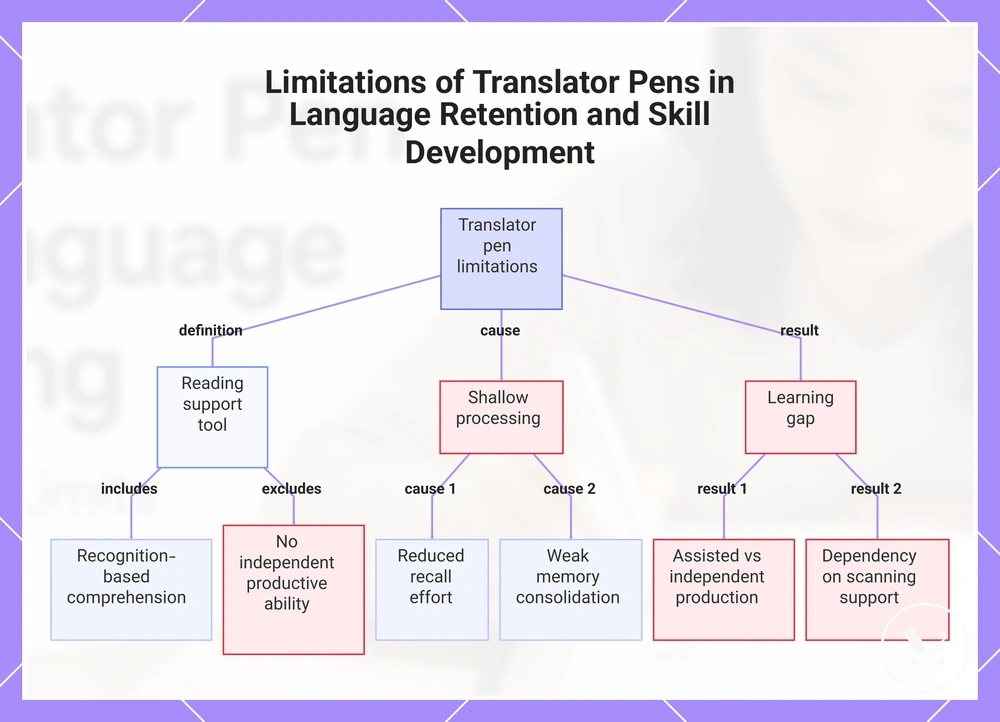
Translator pen is a reading support tool that assists comprehension by converting scanned text into accessible meaning, but it does not independently develop full productive language ability. Its primary function remains within recognition-based reading support, which helps users understand input without necessarily requiring language output. In many study contexts, this creates a constraint where long-term retention, grammar internalization, and expressive skill development may not progress at the same depth as active production methods. The reliance on recognition over generation defines its functional boundary in sustained learning environments.
The main limitation appears in how shallow processing can occur when learning is driven mainly by scanning and immediate translation instead of recall-based engagement. While comprehension may improve during reading tasks, reduced recall effort can limit retention depth and weaken long-term memory consolidation. Productive language ability such as sentence formation or spontaneous writing may develop more slowly because language structures are not repeatedly reconstructed from memory. This can also influence grammar internalization, as exposure alone may not fully reinforce rule-based application in independent usage. Over time, this creates a learning gap between understanding text and actively producing language without assistance.
In practical study situations, a learner may read and understand passages using a translator pen but struggle when required to produce similar sentences without scanning support, illustrating a dependency risk on assisted comprehension. This contrast between assisted reading and independent production highlights how skill development can remain uneven when recall practice is limited. When reliance on scanning becomes dominant, expressive ability may not develop at the same rate as comprehension skills. The outcome depends on how often learners transition from recognition-based input to active recall and production tasks. This balance determines how effectively language skills transfer beyond tool-supported reading environments.
This chart explains the key limitations of translator pens, showing how their recognition-based reading support leads to shallow processing, weak memory consolidation, and a learning gap between assisted reading and independent production.
Dependency Risks and Reduced Learning Effectiveness When Over-Relying on Translator Pens
Dependency in translator pen use refers to a behavioral pattern where overuse encourages immediate scanning for meaning instead of relying on contextual inference during reading. This dependency can reduce cognitive engagement by shifting attention away from interpreting sentence structure and toward instant translation output. In many learning contexts, overuse of scanning tools may gradually reduce independent reading development because learners bypass natural meaning-building processes. The translator pen remains central to comprehension support, but its repeated use can shape a pattern of shortcut-based understanding rather than sustained interpretation.

In practice, overuse of translation tools may affect contextual inference by reducing the learner’s tendency to interpret meaning from surrounding sentences. When learners rely heavily on immediate scanning, cognitive engagement can shift from active processing to passive recognition, which may influence reading development over time. For example, instead of guessing meaning from context, a learner may consistently scan every unfamiliar word, reducing opportunities to build inference skills. This pattern can also lower recall effort, as repeated external support replaces internal memory retrieval during reading tasks. These behavioral shifts may vary across learners but often show reduced engagement in deeper comprehension processes.
A common assumption is that translation tools always improve learning efficiency, but in practice the effect depends on how they are used in relation to active reading. While the translator pen can support comprehension, overuse may create dependency patterns that limit contextual processing and slow independent reading development. In contrast, controlled use allows learners to maintain cognitive engagement while still benefiting from support when needed. The difference lies in whether the tool supplements reading or replaces inference-based learning behaviors, which leads into broader considerations of balanced reading strategies.
Best Practices for Maximizing Language Learning Outcomes with Translator Pen Usage
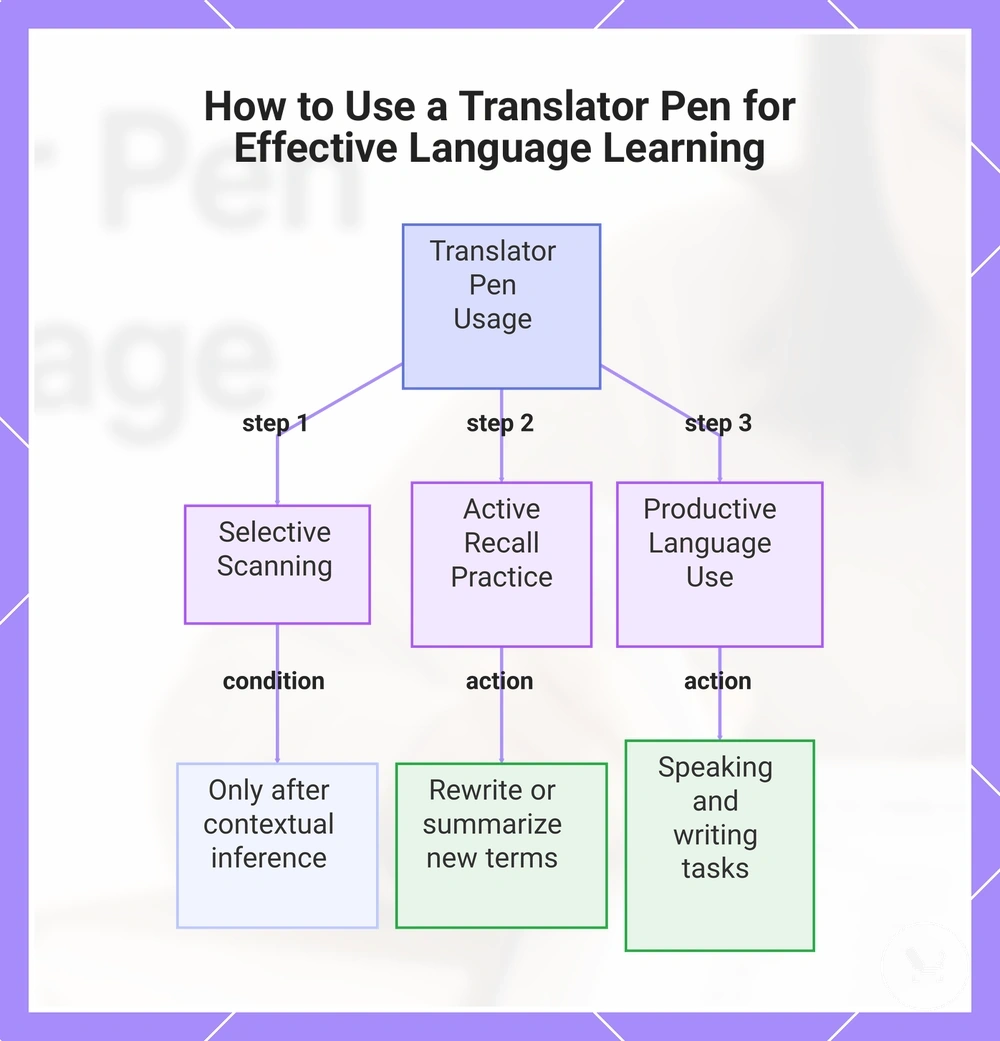
Translator pen usage depends on treating it as a supportive comprehension support tool rather than a primary learning method, as it can improve language learning outcomes when integrated with structured study habits. Selective scanning should be applied only when contextual inference is insufficient, allowing learners to first attempt meaning-making through surrounding text before relying on the tool. Active recall remains essential because it strengthens retention beyond recognition-based comprehension support. When used in this balanced way, the translator pen contributes to study balance by supporting understanding without replacing independent processing. This creates a usage principle where comprehension support is conditional on learner engagement.
The products below are useful examples for comparing available options. Before buying, check that the compatibility criteria, key features, and product details match your needs.
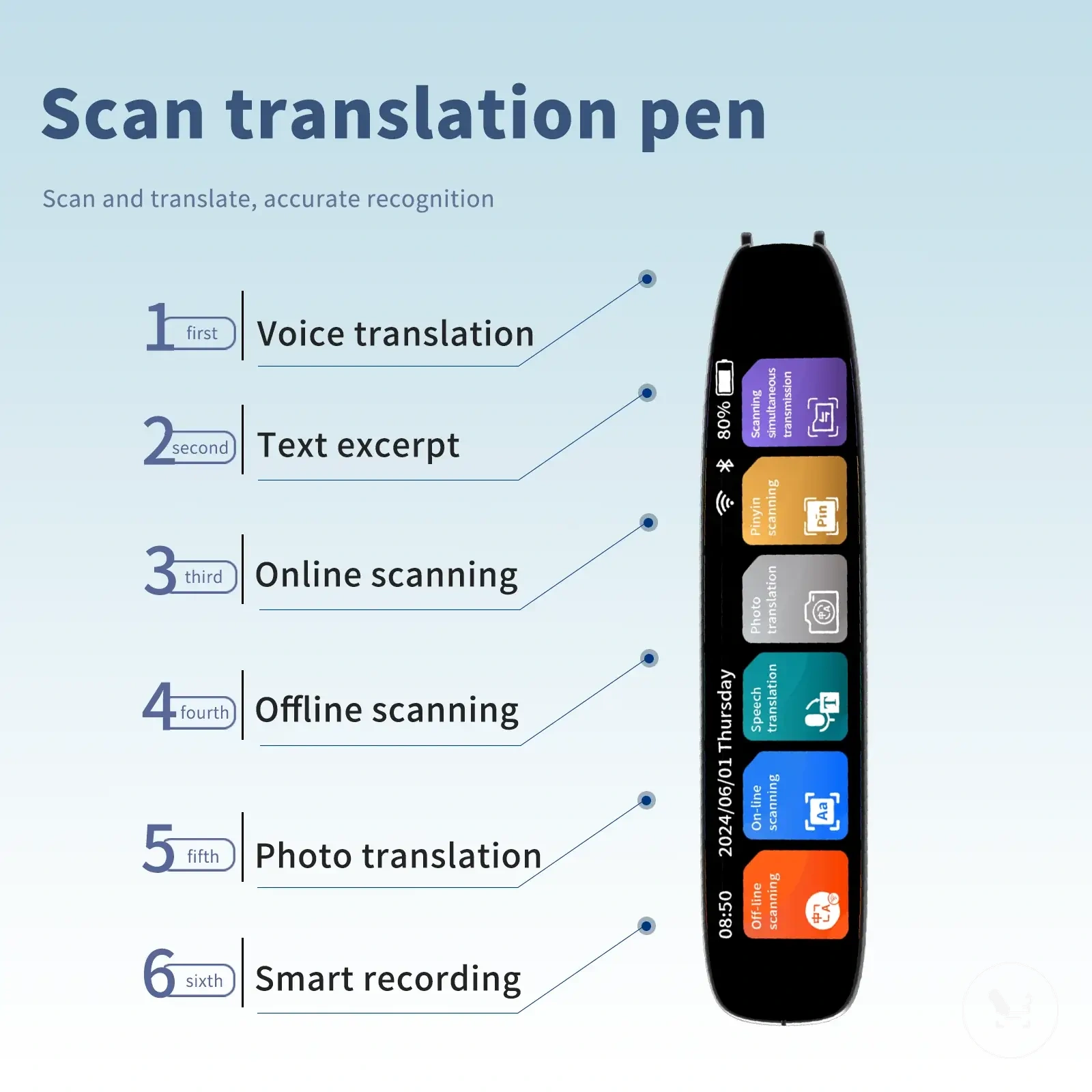
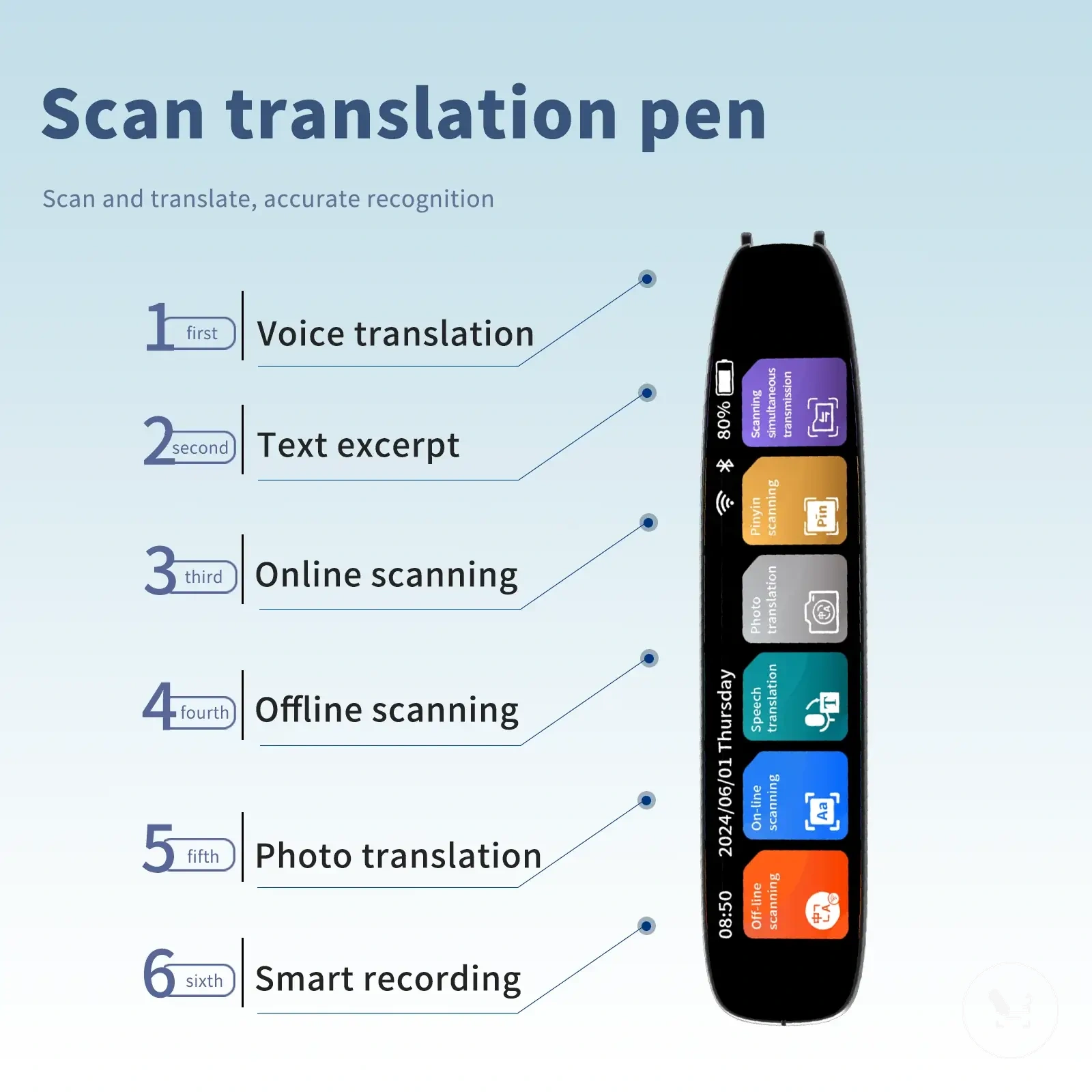
In a typical learning scenario, a learner may first read a passage without interruption to build initial contextual inference, then use selective scanning only for unclear vocabulary or phrases. After this, reinforcing new terms through active recall activities such as rewriting or summarizing helps strengthen learning outcomes beyond passive recognition. Speaking and writing practice can also be integrated to convert comprehension into productive language ability over time. This structured approach prevents overreliance while maintaining steady engagement with reading material. A balanced checklist of usage principles follows:
- Apply selective scanning only after attempting contextual inference
- Reinforce new vocabulary through active recall practice
- Integrate speaking or writing tasks after reading sessions
- Use comprehension support as a secondary tool, not the primary method
- Maintain consistent study balance between input and output activities
Effective language learning outcomes are more likely when translator pen use remains supportive rather than dominant, allowing learners to combine comprehension support with active recall across study sessions. This balance helps maintain cognitive engagement while reducing overdependence on scanning for meaning. When learners alternate between inference, selective scanning, and productive practice, retention and reading development can improve in a more stable pattern.
This chart shows the balanced usage principles for a translator pen, emphasizing selective scanning, active recall, and productive practice to maximize learning outcomes.