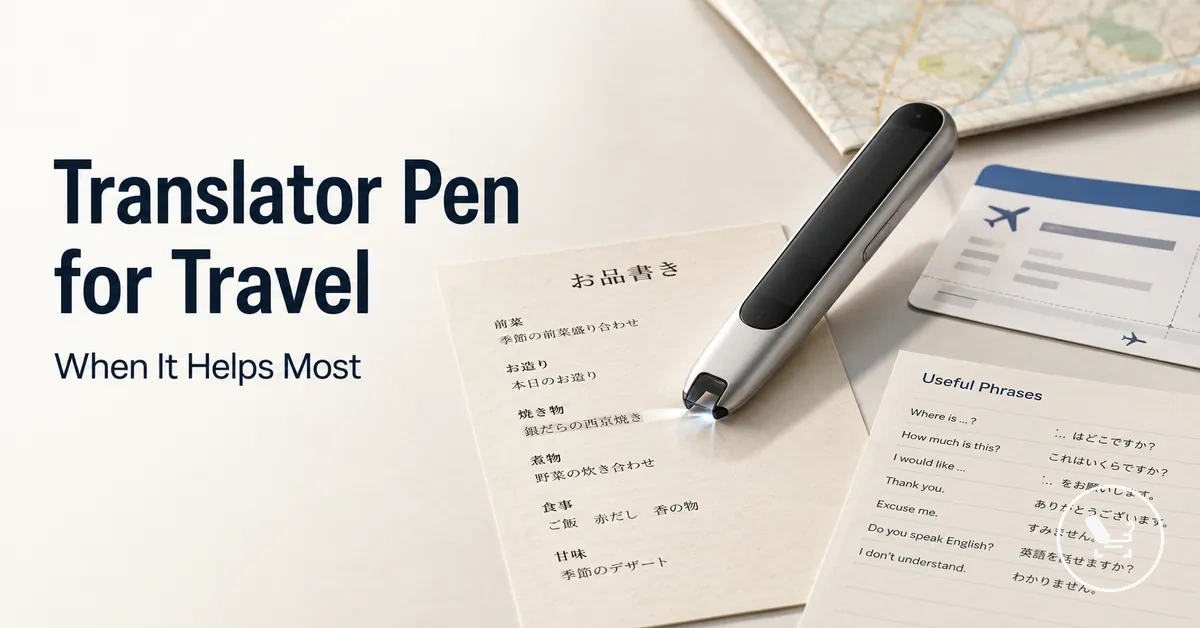
Translator Pen for Travel: Real-world usage in travel environments and when language support becomes necessary
A translator pen is a portable OCR scanning translation tool used in travel communication when language barrier situations make foreign text comprehension difficult. It supports reading and interpreting printed information by capturing text through OCR scanning and enabling portable translation in contexts where immediate understanding is needed, especially when encountering unfamiliar languages during travel across different regions.
In real travel environments, language barrier situations often appear in airports, hotels, transit systems, and cross-border interactions where written instructions are dense and time-sensitive. Travelers may encounter foreign text on boarding gates, luggage tags, hotel check-in forms, transportation schedules, and local signage that requires quick interpretation. During transit navigation, scanning pen use can support reading menus, notices, or printed guidance that would otherwise slow down decision-making. These environments show how travel communication depends on fast access to translated written content across changing settings.
The usefulness of a translator pen in travel settings may vary depending on language coverage, clarity of printed text, and environmental conditions such as lighting or movement. OCR scanning performance can also depend on how structured or readable the foreign text is, along with connectivity or offline constraints. Because of these factors, portable translation outcomes are not uniform across all travel communication scenarios, and foreign text comprehension support can differ based on destination and usage conditions.
What a translator pen does in travel contexts: definition, scope, and communication role abroad
A translator pen is an OCR-based tool designed for printed text translation in travel environments where language conversion is needed to support foreign text comprehension. It functions as a scanning pen that captures written information from travel documents and converts it into a readable translated form, helping users interpret unfamiliar languages during travel communication situations.
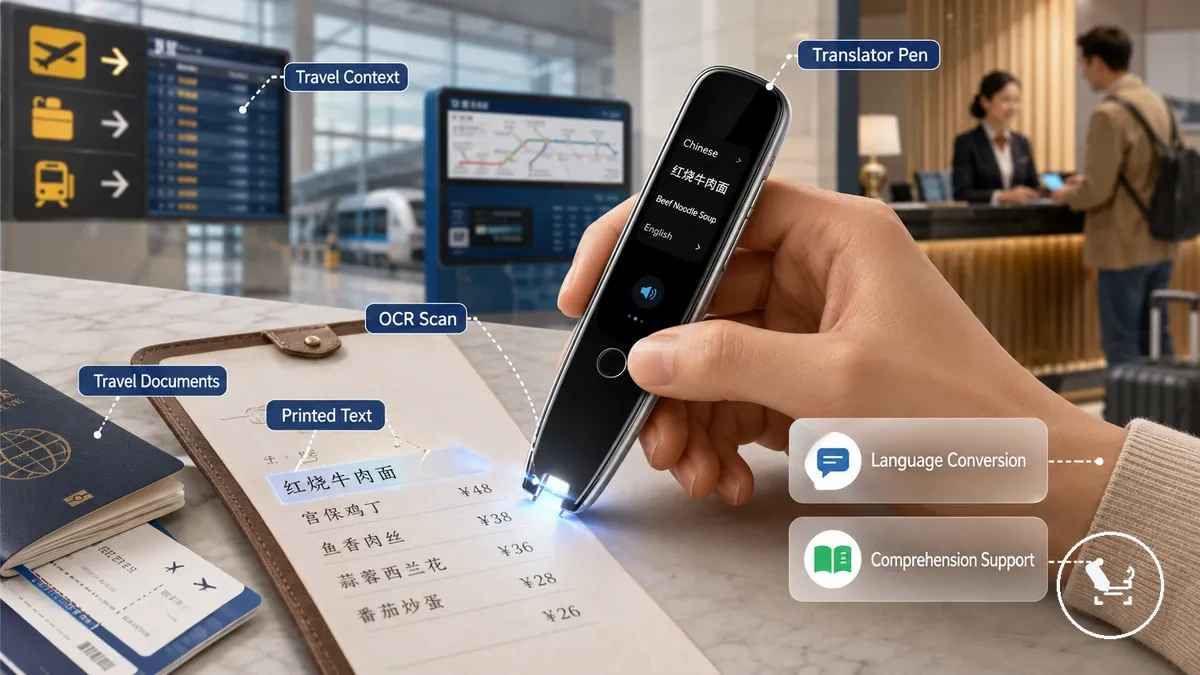
In practical use, a translator pen is typically associated with reading structured travel materials such as menus, tickets, transport signs, and printed notices found in airports, hotels, and transit systems. These contexts often involve dense written information where quick understanding is needed, and OCR-based scanning supports faster interpretation of foreign text without requiring manual translation. The scope remains focused on reading and comprehension of printed content rather than broader interaction tasks.
A translator pen does not replace full conversational communication tools and is generally limited to printed text translation tasks within specific travel conditions. Its role is centered on assisting language barrier situations where written information must be interpreted quickly, while spoken dialogue and complex interactions may require additional tools or methods beyond scanning-based translation.
Airport, hotel, immigration, and transit environments where translation support becomes necessary
Arrival and movement through travel hubs often create immediate language friction when travelers encounter structured environments filled with unfamiliar printed instructions and time-sensitive guidance. In these settings, understanding written information becomes a dependency on language conversion, especially when navigation and decision-making rely on quick interpretation of foreign text.
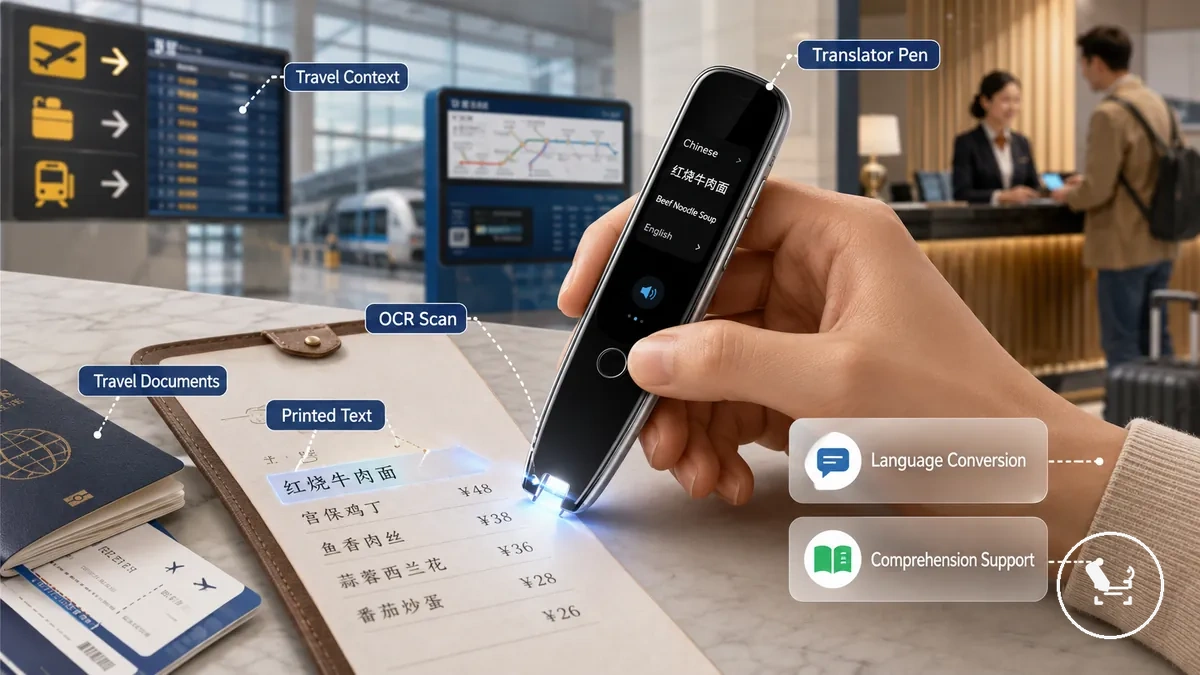
Airports typically present airport signage, boarding instructions, and security guidance that must be interpreted quickly to maintain transit flow, especially during tight schedules or unfamiliar routing systems. Immigration areas introduce structured document requirements where immigration forms and verification instructions may contain precise language that affects processing steps. Hotel check-in environments often involve printed instructions, registration forms, and service details that require accurate reading for smooth communication between staff and guests. Transit navigation systems such as metro maps, platform notices, and printed instructions can further increase reliance on immediate comprehension during movement between locations. In each of these contexts, language barriers can slow down understanding when written communication is dense or unfamiliar, making interpretation a situational necessity rather than an optional convenience.
The need for translation support in these environments depends on factors such as clarity of signage, language familiarity, and the complexity of printed instructions, meaning outcomes may vary across locations and travel conditions. While interpretation tools can reduce friction in many cases, their effectiveness is still shaped by context-specific variables rather than uniform reliability across all travel situations. :contentReference[oaicite:0]{index=0}
Emergency travel situations requiring fast interpretation of foreign written information
Emergency travel communication refers to high-pressure situations where travelers must interpret unfamiliar written instructions quickly, often while time constraints or uncertainty increase the risk of misunderstanding. In these conditions, emergency translation needs are driven by urgency rather than convenience, especially when foreign text appears in disrupted or stressful travel environments.
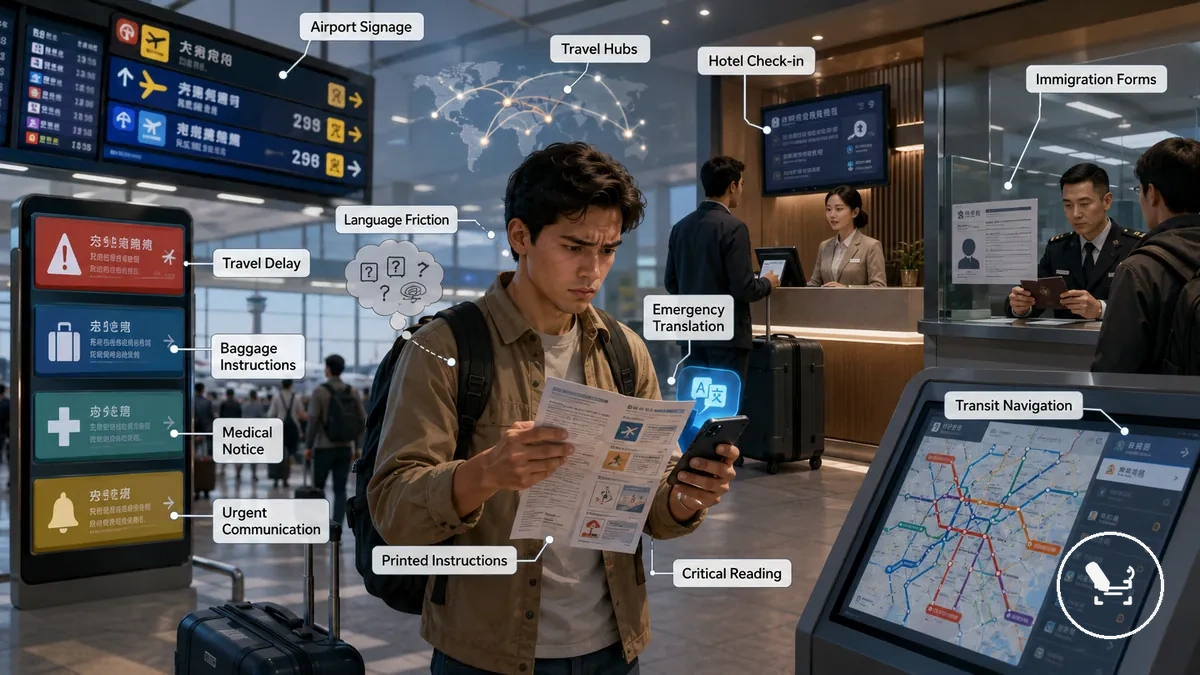
A travel delay notice at an airport can introduce sudden changes in boarding gates or departure times, where misreading airport updates may affect navigation decisions. Lost baggage processes often rely on detailed baggage instructions that must be followed under time pressure, increasing the need for accurate crisis reading of written guidance. A medical notice in a pharmacy or clinic abroad may contain urgent communication that requires careful interpretation of instructions in unfamiliar language conditions. In some transit disruptions, emergency translation may be needed to understand rerouting messages or platform updates where rapid comprehension is essential for continued movement.
In these situations, translation support can help reduce the likelihood of misunderstanding, particularly when written information is dense, unclear, or delivered under stress. However, its effectiveness typically depends on factors such as language structure, document clarity, and the level of situational pressure, meaning outcomes may vary across different emergency travel contexts.
Reading foreign text during travel: menus, tickets, signs, and documents
Reading foreign text during travel refers to the need to understand everyday printed materials such as menus, tickets, signs, and documents when navigating unfamiliar language environments. Travel reading creates friction when printed text cannot be immediately understood, especially during routine decisions that depend on quick comprehension of written information.
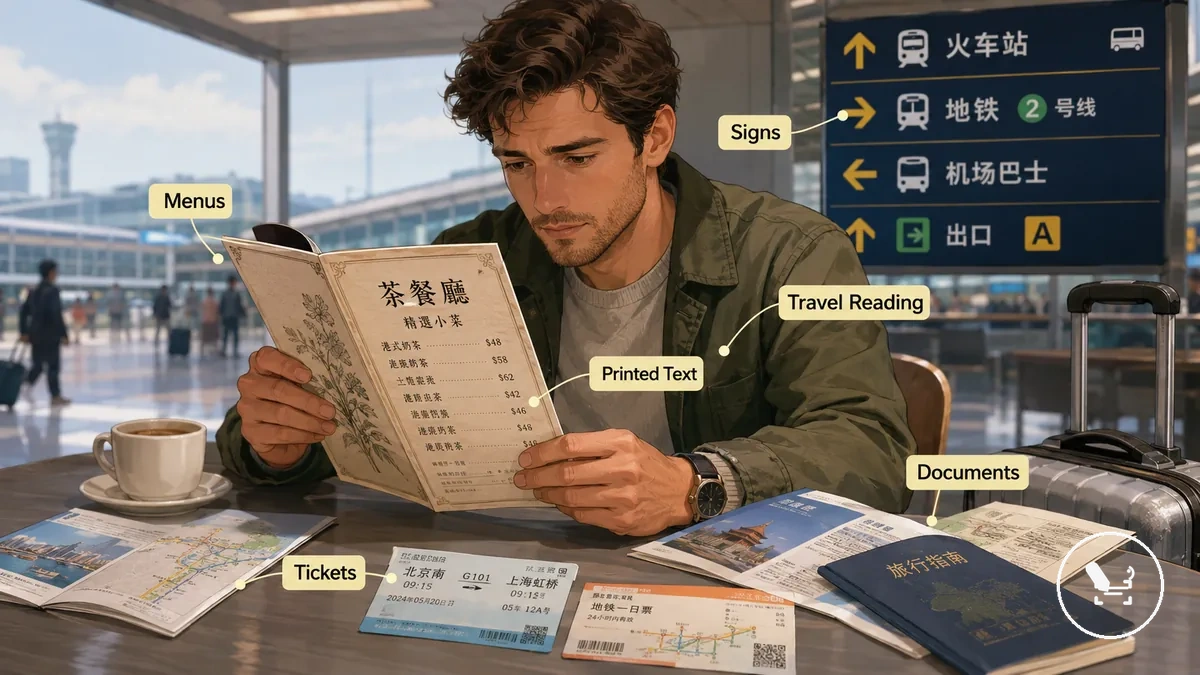
In practical travel situations, menus in restaurants require understanding food descriptions and ordering details, while tickets in transport systems include schedules, seat information, and route instructions that depend on clear interpretation. Signs in public spaces provide navigation cues and directions that may become difficult to follow when language is unfamiliar. Brochures and other printed materials often contain additional travel information that supports orientation, but still rely on readable text for full understanding of services or locations.
Comprehension of these written materials may vary depending on language familiarity, document clarity, and context, meaning travel reading support can become important when uncertainty affects interpretation. In many cases, understanding printed text directly influences how smoothly travelers navigate environments, but outcomes depend on how clearly information is presented and how well it can be interpreted in real time.
Offline mode, connectivity limits, and roaming constraints during international travel
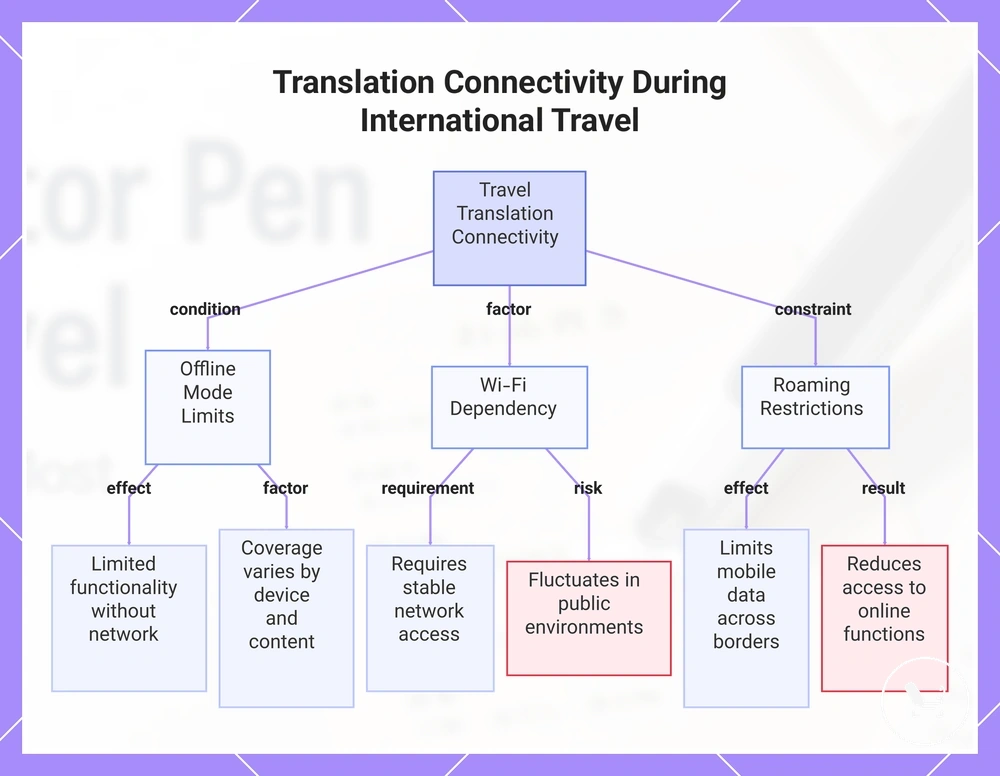
Translation connectivity depends on varying network conditions during international travel, where offline mode, Wi-Fi access, and mobile roaming limits may each affect availability. These connectivity differences create uneven travel usability, especially when moving between regions with inconsistent network access.
The products below are useful examples for comparing available options. Before buying, check that the compatibility criteria, key features, and product details match your needs.
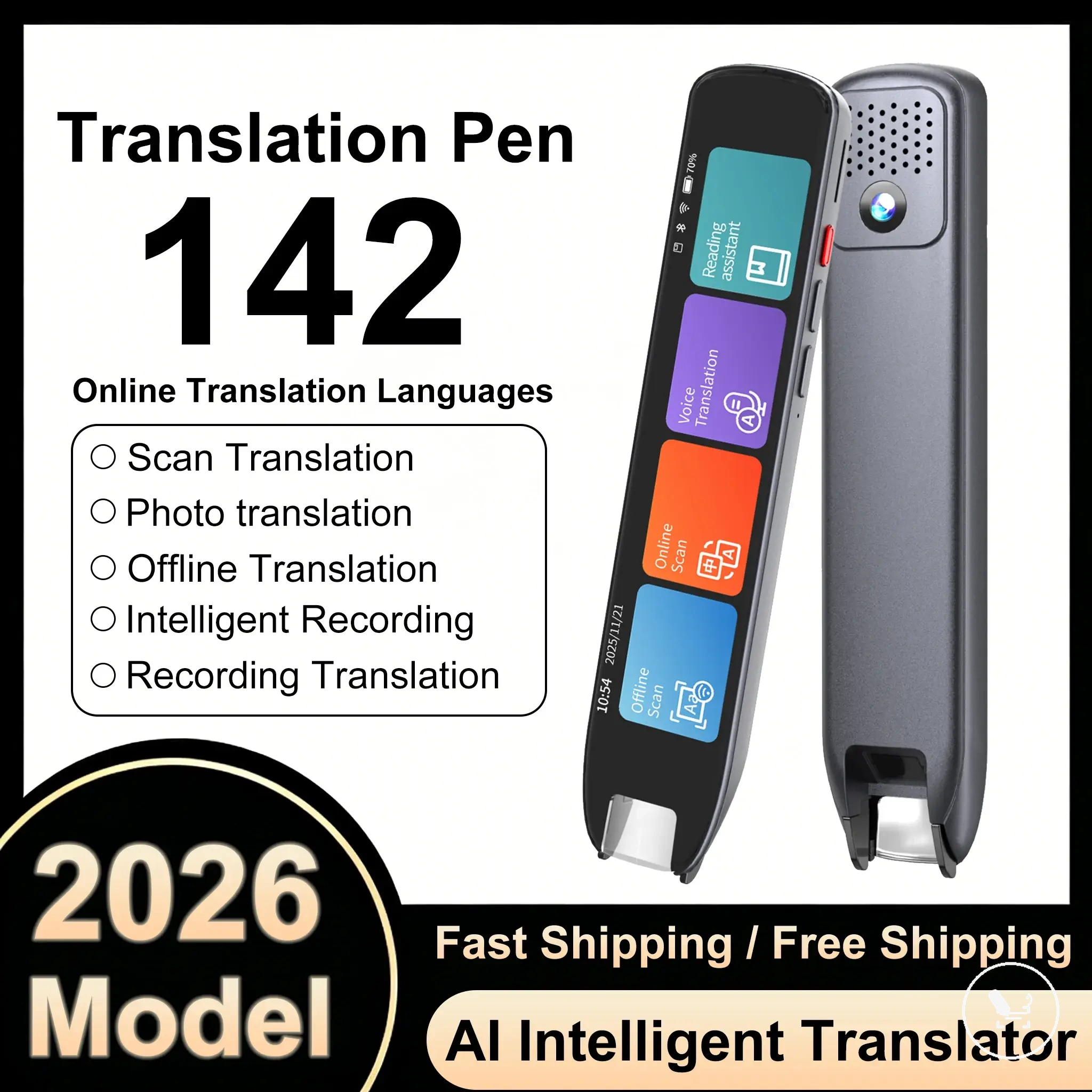
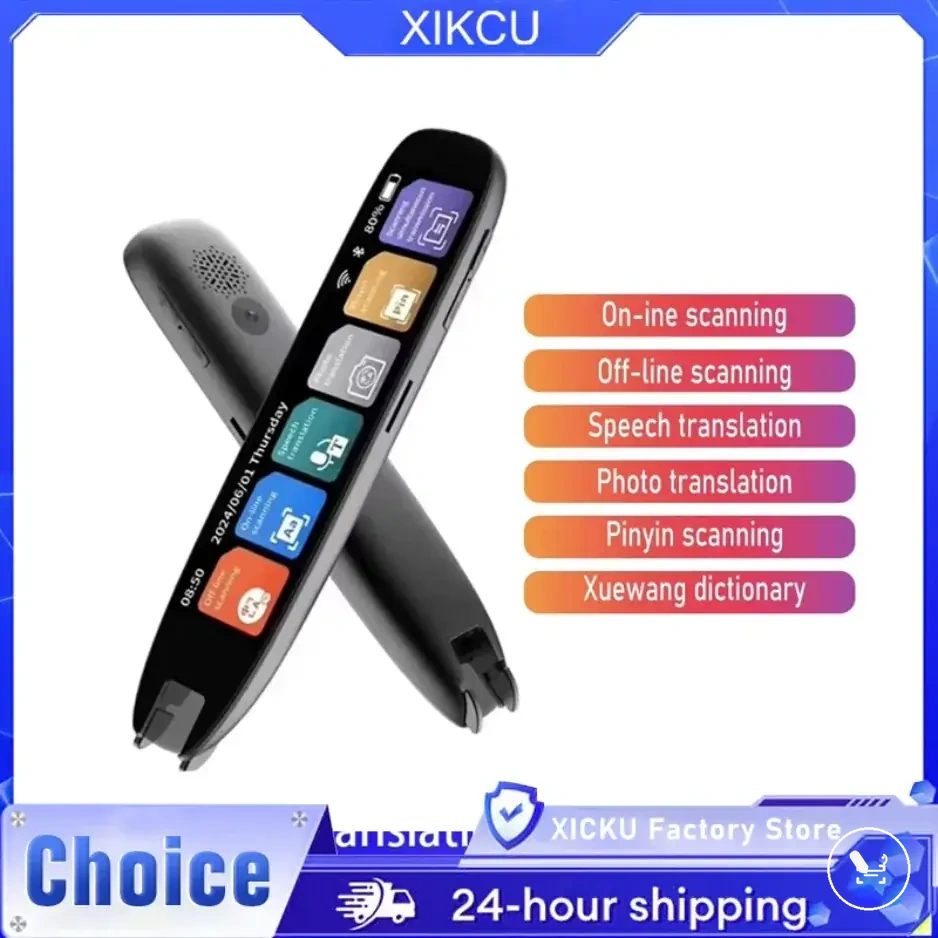
Offline translation can support limited functionality when connectivity is not available, but its coverage may differ from connected modes depending on the device and content type. Wi-Fi dependency introduces reliance on stable network access, which may fluctuate in public or shared environments. Roaming limits can further restrict mobile data usage across borders, reducing consistent access to online translation functions. Connectivity changes between locations may therefore affect how reliably translation tools respond during movement. In many cases, usability varies based on whether the system is operating offline or requires active network access.
Overall, translation reliability during travel remains conditional because connectivity, Wi-Fi dependency, and roaming limits influence access across different environments. As a result, travel usability may change depending on network availability at any given moment, rather than remaining constant throughout the journey.
This chart shows how offline mode, Wi-Fi dependency, and roaming limits affect translation reliability and usability during travel.
Language coverage differences and regional compatibility across travel destinations
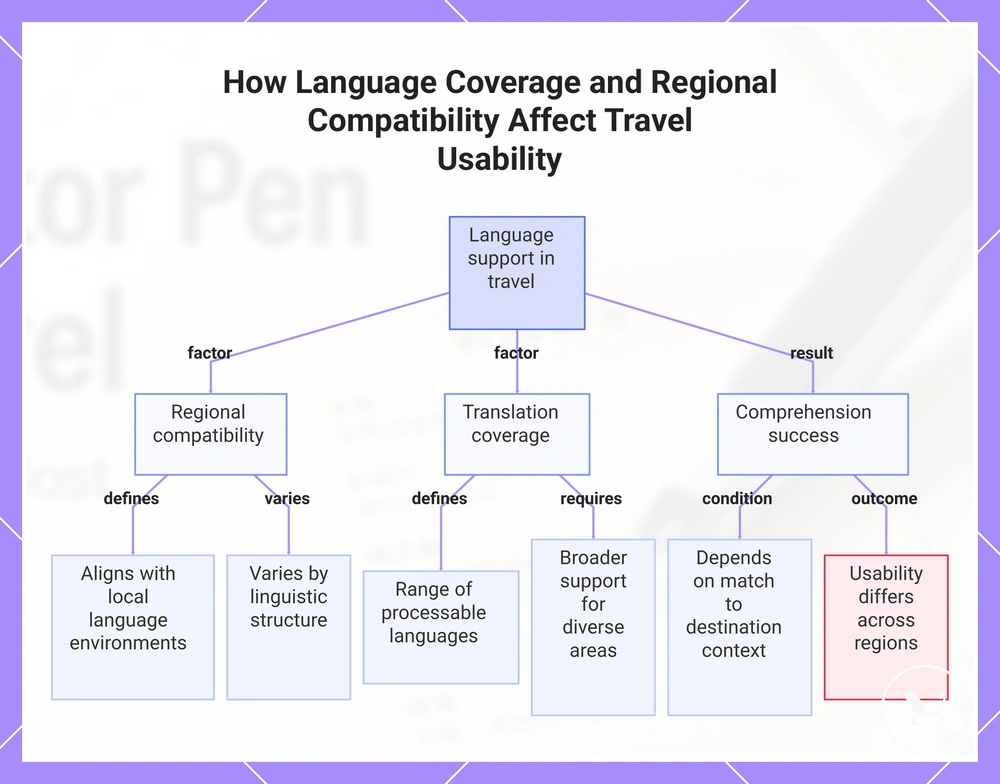
Language support depends on destination language requirements, which influence translation effectiveness across different travel regions. Regional compatibility determines how well translation systems align with local language environments, while translation coverage defines the range of languages that can be processed. In many cases, comprehension success depends on how closely available language support matches the destination language context.
Regional differences in language support create variation in real-world travel usability because not all destinations share the same linguistic structure or multilingual expectations. Some regions require broader multilingual support due to diverse destination language usage, while others rely on more limited language sets that reduce translation coverage. These differences can affect comprehension success when written content shifts between scripts or language systems. Multilingual support may therefore perform differently depending on whether the destination uses widely supported languages or less common regional languages. As a result, compatibility between language range and travel region becomes a key factor in usability.
Overall, language support remains conditional in travel environments because regional compatibility and translation coverage vary by destination. Comprehension success is therefore influenced by how well the available language range aligns with local requirements, meaning usability may differ across regions rather than remaining consistent in all contexts.
This chart shows the key factors of regional compatibility and translation coverage that determine comprehension success and usability across travel destinations.
Portability, battery life, and operational endurance requirements for travel use
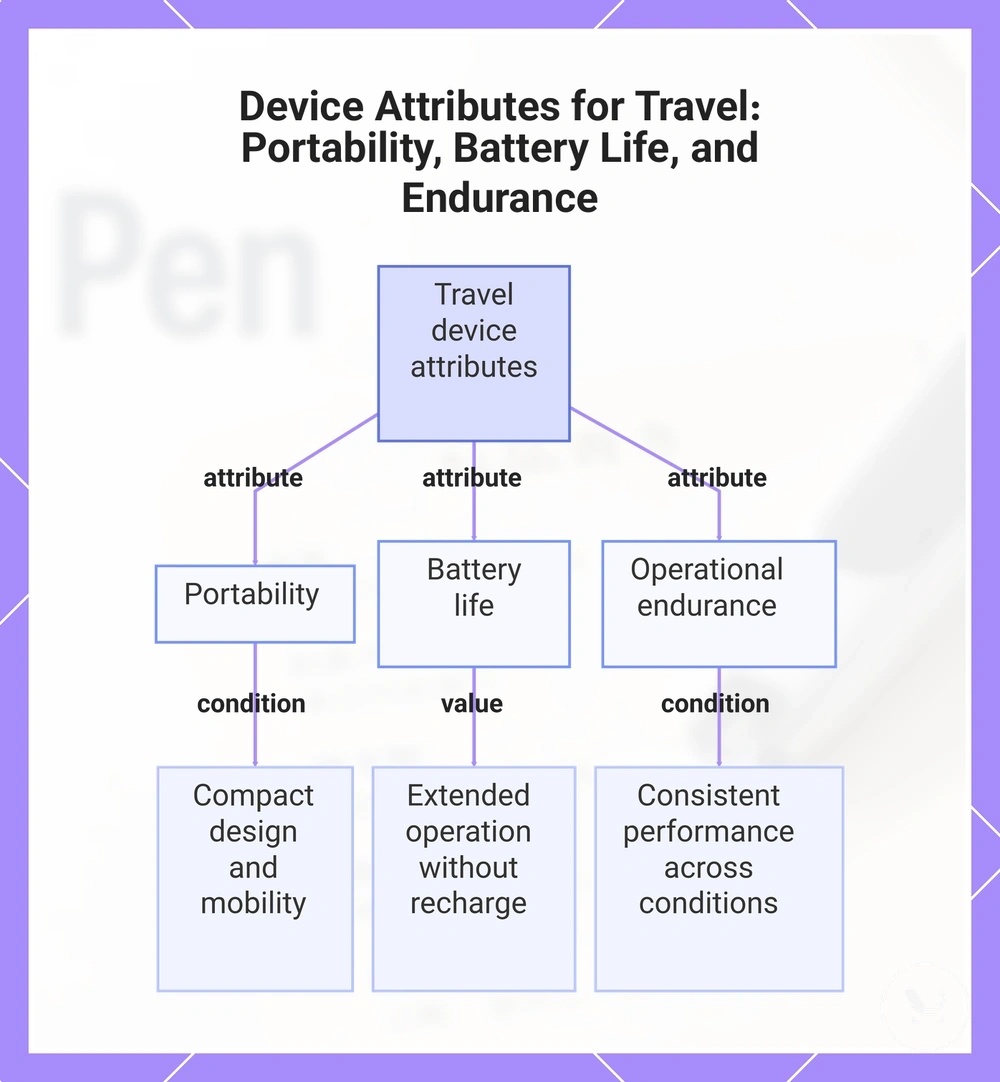
Device attributes refer to portability, battery life, and operational endurance requirements that affect travel usability in environments where sustained use depends on movement and limited access to charging.
Portability influences how easily a device can be carried throughout travel days, especially when compact design and mobility are required during frequent location changes. Battery life determines how long the device can remain operational without recharge, which becomes important during extended periods away from power sources. Operational endurance reflects how consistently the device performs under repeated use across different travel conditions. These attributes often interact, since higher mobility can increase reliance on efficient power duration and stable performance. In many travel scenarios, limitations in one area may place additional pressure on the others, especially during long transit periods. As a result, travel usability is shaped by how well these factors remain balanced under continuous movement.
Overall, portability, battery life, and endurance act as practical constraints that define whether a device remains usable throughout travel conditions. Their combined effect determines sustained usability, which may vary depending on travel duration, access to power, and frequency of use. :contentReference[oaicite:0]{index=0}
This chart shows the three main device attributes that determine travel usability and their key implications for sustained use.
How to choose a translator pen for travel based on environment, usage intensity, and reliability needs
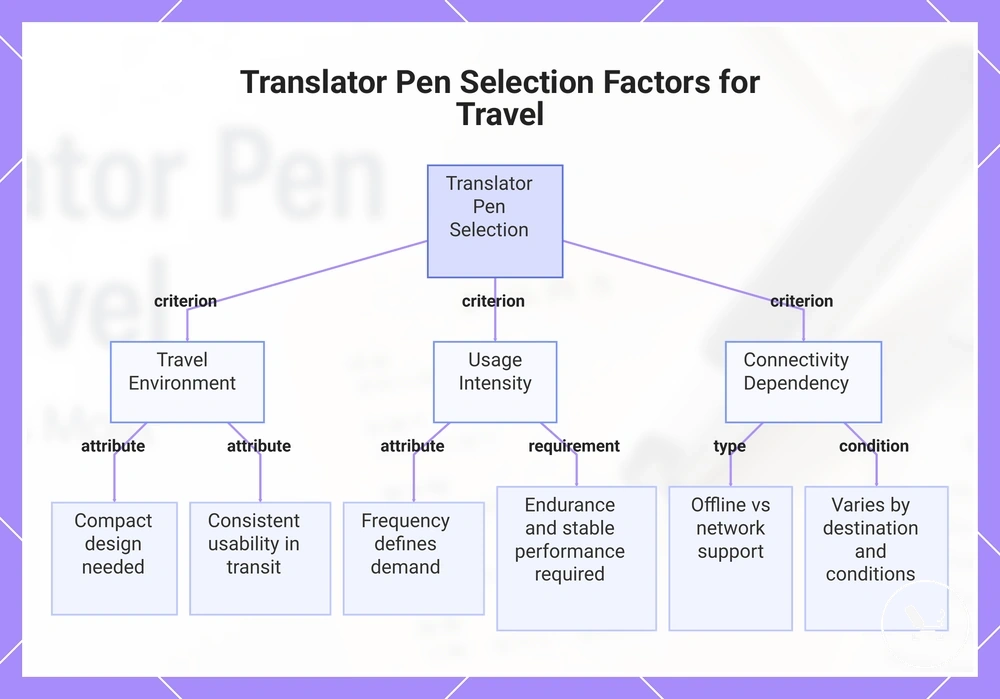
Selection criteria for a translator pen depend on travel environment, usage intensity, and connectivity dependency, since these factors collectively determine translation reliability under real travel conditions.
The travel environment influences how selection criteria are applied, especially in mobility-focused settings such as transit spaces where compact design and consistent usability matter. Usage intensity defines how frequently translation is required, and higher frequency can place greater demand on endurance and stable performance over extended travel days. Connectivity dependency affects whether translation reliability is primarily supported through offline functionality or network access, which may vary across destinations and conditions. Together, these decision factors shape how consistently a translator pen performs across different travel scenarios where language interpretation is required.
The products below are useful examples for comparing available options. Before buying, check that the compatibility criteria, key features, and product details match your needs.
Overall, choosing a translator pen involves balancing travel environment constraints, usage intensity, and connectivity dependency against expected translation reliability, since stronger performance in one area may require trade-offs in another. This balance determines practical suitability for sustained travel usability rather than uniform performance across all conditions. PRODUCTS_2
This chart shows the three main selection criteria for a translator pen based on travel environment, usage intensity, and connectivity dependency.
Limitations of translator pens in travel environments and situational constraints affecting performance
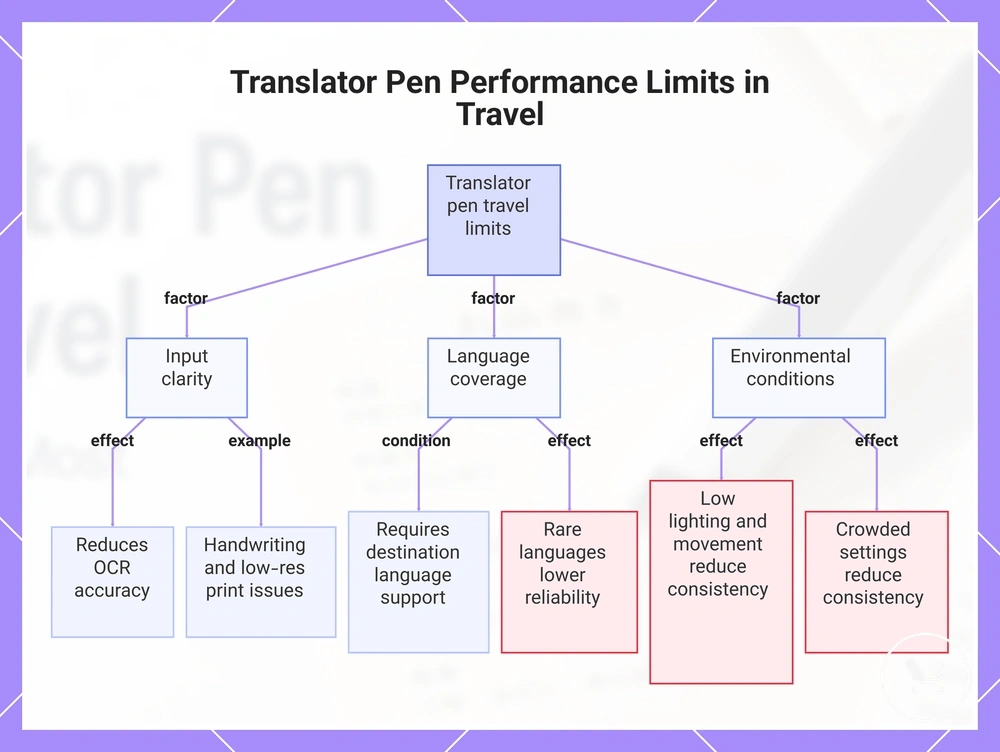
Performance variability in translator pens during travel environments depends on input clarity, language coverage, and environmental conditions, which together create translation limits across different real-world usage situations.
Input clarity affects how accurately OCR interprets printed text, especially when handwriting, low-resolution print, or irregular formatting reduces recognition quality. Language coverage determines whether the device supports the destination language, meaning unsupported or less common languages can reduce translation reliability in certain regions. Environmental conditions such as low lighting, movement during scanning, or crowded travel settings can further influence consistency. These factors often interact, so limitations may become more noticeable when multiple constraints occur at the same time during travel use.
Overall, translation limits arise from the combined impact of clarity, language coverage, and environmental conditions, making performance dependent on situational context rather than uniform outcomes. As a result, translation reliability may vary across travel scenarios where conditions shift frequently, requiring users to account for these constraints when interpreting foreign text. :contentReference[oaicite:0]{index=0}
The products below are useful examples for comparing available options. Before buying, check that the compatibility criteria, key features, and product details match your needs.
This chart shows the three main factors that cause translator pen performance to vary during travel use.